Saturday, December 19, 2020

416. PROMENADE ALL. From my (unpublished) ENCYCLOPEDIA OF THE NEW YORK STAGE, 1970-1975


Anne Jackson, Hume Cronyn, Eli Wallach, Richard Backus (front).
PROMENADE ALL [Comedy/Business/Family/Sex] A: David V. Robison; D: Arthur Storch; S: David Chapman; C: James Berton Harris; L: Martin Aronstein; P: Fred Coe, Arthur Cantor, and Charles Taubman i/a/w LARC, Inc.; T: Alvin Theatre; 4/16/72-5/27/72 (48)

Anne Jackson.

A generation-spanning comedy with four scenes taking place, respectively, in 1895, 1920, 1945, and “approximately now.” It allowed its stellar, four-member cast opportunities for tour-de-force performances in which, with costume and makeup changes, they could each play a variety of roles. The story chronicles the fortunes over 75 years of the Huntziger family, shortened to Hunt, with its focus on Willie (Richard Backus, Hume Cronyn), heir to the family’s button-making fortune.

Eli Wallach.

The critics enjoyed the acting more than the play, which Clive Barnes termed “amiable, at times rather too bland, and often too obvious, but with a few really sharp lines.” Walter Kerr said it was a “stock company play” with too many clichés and too few surprises. “Mr. Robison makes his points with crude, cartoonlike strokes,” noted Brendan Gill, and “is almost invariably leaden when he should be light” John Simon, observing that the comic material dealt primarily with sex and money, said it did so as “mostly facile doodling and dawdling facetiousness.” 

Barnes, after highly praising Cronyn's work, opined:

Mr. Wallach [has] fine fun, first as a repressed old man vicariously admiring his son's sexual freedom, and then as his own grandson, mean, bigoted and determined to end up very, very rich. Although Mr. Wallach acts everything larger than life and Mr. Cronyn acts everything smaller than life, in this play their acting styles seem perfectly complementary.

Anne Jackson plays all the women . . . , from aged grandmother to middle‐aged matron and plays them all with a gentle emphasis and smooth skill. Finally completing the quartet is Richard Backus. . . [,] an actor of great resource and promise. . . [;] here he jumps generation gaps as if they were hurdles.

The actors were members of a new group called Loose Actors Revolving Company (LARC), which boasted a membership of many top stars, and which intended to produce worthwhile plays on Broadway. The plan vanished after this first attempt failed, even with Eli Wallach and Anne Jackson backing up veteran Cronyn and talented newcomer Backus. The latter won the Theatre World Award, the Clarence Derwent Award, and the Variety poll for Most Promising New Broadway Actor. If you wish to learn more about his subsequent career, click here.


Friday, December 18, 2020

415. THE PRODIGAL SISTER. From my (unpublished) ENCYCLOPEDIA OF THE NEW YORK STAGE, 1970-1975

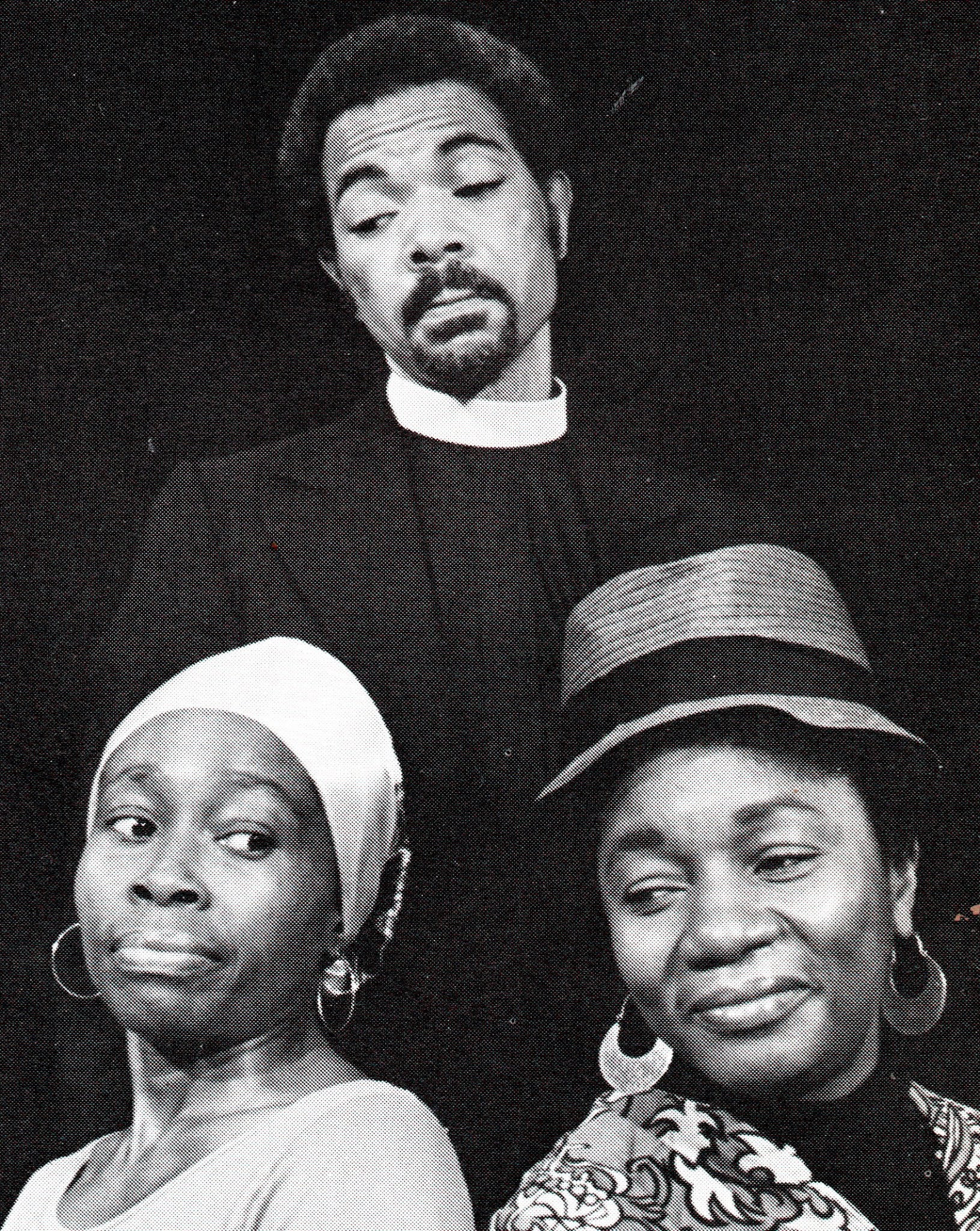
Frances Salisbury, Louise Stubbs.

THE PRODIGAL SISTER [Musical/Family/Prostitution/Race/Southern] B: J.B. Franklin; M: Micki Grant; LY: J.E. Franklin, Micki Grant; D: Shauneille Perry; CH: Rod Rodgers; DS: C. Richard Mills; C: Judy Dearing; P: Woodie King, Jr.; T: Theatre de Lys (OB); 11/25/74-12/29/74 (40)

The Biblical tale about the prodigal son inspired this Black musical with rhymed dialogue about Jackie (Paula Desmond), a 17-year-old girl from a Georgia small town, who gets pregnant. To escape her father’s (Leonard Jackson) wrath, she runs away to Baltimore. Her adventures in the big city are seen as if in the crystal ball of a seeress.

Frances Salisbury, Frank Carey, Esther Brown.

In Baltimore, she becomes indentured to Baltimore Bessie (Louise Stubbs), proprietress of a combination coffin factory and whorehouse. Jackie eventually gets herself shipped home—in a company casket—to be joyfully welcomed back by her anxious but forgiving family.

Musical numbers included "Slip Away," "Ain't Marrying Nobody," "If You Know What's Good for You," "Big City Dance," "Sister Love," "Hot Pants Dance," and, among others, "The Prodigal Has Returned."

Largely negative reviews sealed the fate of this show, which had begun life as an Off-Off Broadway showcase. Clive Barnes viewed it as an artlessly naïve work, whose “good nature and fervor seems to stand somewhere between a block party and a revival meeting.” It was “robustly comic, sometimes touching,” to John Beaufort. But to Martin Gottfried the evening was “the world’s longest 90 minutes,” the two-dozen songs were “in a soul style drained of life,” the choreography was “a self-parody,” and the direction was “utterly without drive.” It was “too simple-minded” by far for Douglas Watt, while Edith Oliver described it as “a coarsely drawn caricature of middle-class black life,” with embarrassing stereotypes and a vulgar plot. John Simon flushed it away as “of unsurpassable emptiness and amateurishness.”

Thursday, December 17, 2020

414. PRIVATE LIVES. From my (unpublished) ENCYCLOPEDIA OF THE NEW YORK STAGE, 1970-1975


John Standing, Maggie Smith.
PRIVATE LIVES [Dramatic Revival] A: Noël Coward; D: John Gielgud; S: Anthony Powell; C: Germinal Range, Beatrice Dawson; L: H.R. Poindexter; P: Arthur Cantor b/a/w H.M. Tennent, Ltd.; T: Forty-sixth Street Theatre; 2/6/75-4/26/75 (92)

John Standing, Niki Flaks.

This is Noël Coward’s 1930 high comedy about a divorced couple who meet after five years while occupying adjoining suites at a Deauville hotel, where they are honeymooning with their new spouses.  Self-described by its author as a vehicle for sterling acting, its London production had starred Coward himself opposite Gertrude Lawrence, surely perfect casting. Wealthy ultra-sophisticates Amanda Prynne and Elyot Chase were now played by Britons Maggie Smith and John Standing to enthusiastic responses, especially for Smith.

Coward’s polished wit continued to sparkle and stir loud laughter. Douglas Watt called Private Lives “an immaculate comedy [that] seems to get funnier each time I see it,” while Clive Barnes found it “screamingly funny . . . still fresh, and most surprisingly, still surprising.” “How perfect the play is,” he added, “a gorgeous, enchanting play.”

Maggie Smith, Remak Ramsey.

For most viewers, John Gielgud’s direction was a masterful evocation of Coward’s nostalgic 1920s charm. Maggie Smith proved a superb purveyor of the brittle, flashing epigrams. “The tall and slender Miss Smith, her red hair closely marcelled, and wearing a nifty set of specially designed clothes, has deadly aim with a Coward line. Using a voice variously produced in her nose, throat and heel of her evening slipper, and a body as pliant and darting as an antic mongoose, she is hilarious,” clapped Watt. “[S]he conveys a special image of woman—self-reliant, entirely self-aware, audacious, . . . all suffused with a marvelous irony. . . . She is some sort of pagan goddess. . . . Amanda Prynne . . . is a perfect role for her, and she does it to perfection,” declared Howard Kissell. But Edwin Wilson thought her over-obvious and broad, producing farce effects that were not called for. And John Simon was put off by her “mannered” acting and exaggerations.

John Standing’s notices were approving but mild, with no raves, some even considering him miscast. Remak Ramsey played Victor Prynne and Niki Flaks was Sybyl Chase.

This revival came to Broadway following a hit London run and a four-month American tour.

Wednesday, December 16, 2020

413. THE PRISONER OF SECOND AVENUE. From my (unpublished) ENCYCLOPEDIA OF THE NEW YORK STAGE, 1970-1975.


Peter Falk, Lee Grant.
THE PRISONER OF SECOND AVENUE [Comedy/Marriage] A: Neil Simon; D: Mike Nichols; S: Richard Sylbert; C: Anthea Sylbert; L: Tharon Musser; P: Saint-Subber; T: Eugene O’Neill Theatre; 11/11/71-9/29/73 (788) 

Lee Grant, Peter Falk.

 A smash hit domestic comedy from comic playwriting kingpin Neil Simon that ran for close to two years and provided Peter Falk with a great role in one of his rare Broadway performances. 

Mel Edison (Falk) is a 47-year-old advertising executive living in an Upper East Side high-rise on Second Avenue with his wife, Edna (Lee Grant). Here he encounters a mélange of urban headaches, from air and noise pollution to unemployment to faulty plumbing to burglaries to apartment house construction defects to drug addiction to psychiatry to the impositions of unfriendly neighbors. The threats from Mel’s environment put increasing pressure on him until he becomes truly alienated from his surroundings and approaches a nervous breakdown. There is no feasible escape, suggests the playwright, who underlines his comic exaggerations with a sense of true despair. 

Mel loses his job in Act One, remains home while his wife works in Act Two, and confronts his brother (Vincent Gardenia) and three wealthy sisters (Florence Stanley, Tresa Hughes, and Dena Dietrich) over his regressive mental state in Act Three. Then Edna informs him that she, too, has been fired. 

Dena Dietrich, Tresa Hughes, Florence Stanley, Vincent Gardenia, Peter Falk.

The critics laughed with tear-producing gusto at all the jokes, commenting that The Prisoner of Second Avenue may well have been Simon’s most hilarious gag fest yet. The sense of angst at its heart, however, revealed that the comedy had a considerably serious soul. There was frequent reference by the reviewers to the play’s structural problems, its lack of fully realized characters, and its stretching the truth to inspire laughs. This “gloriously funny play,” declared Clive Barnes, was “paper thin,” displayed “no real development or conclusion, but concentrates on revealing comic attitudes to trivial despair.” “[O]ften the poverty of the writing reminds you of just how hackneyed these matters are,” responded Julius Novick. There was a “relative vacuum” here, thought Walter Kerr, while Henry Hewes and John Simon pointed to the flatness of the author’s characters amid their amusingly depicted issues. 

The exceptionally well-played production benefitted from Mike Nichols’s adroit, energetic, comically inventive staging, and wonderful performances by the entire company. Clive Barnes left this record of the leads: “Peter Falk, looking like an amiable denizen of the Central Park Zoo who had been given the wrong keeper, is a delight as the battered Mel, full of angst and anguish and definitively put‐down by the zeitgeist. . . . [H]is performance seems most carefully balanced between a suggestion that life is too much for him and one that he is too little for life. . . . Lee Grant is sweet and potent, caring for her husband through the strange emasculation of unemployment and standing back—to—back with him against the slings and arrows of our outrageous city. With his controlled misery Vincent Gardenia is admirable as Mel’s brother.” 

D
Dena Dietrich, Florence Stanley, Tresa Hughes, Vincent Gardenia.

In her autobiography, I Said Yes to Everything, Lee Grant, who had moved from her red-hot movie career in Los Angeles to do the play, recalls working with Nichols and Falk: 
Mike was especially sensitive in his preparation, molding me without my even knowing it, for what was essentially a two-character play. . . . After our first reading, Mike turned to me: "You're the gardener; he's the flower." The blood drained out of me. I had not rented the Red House for a year, I had not moved to a strange apartment, I had not put Dinah in the New Lincoln School to come o Broadway as the gardener,

I was familiar with being a gardener, as were all the wives at 444 Central Park West. 

We'd been good gardeners. Truly concerned with our husbands. Endlessly worried and wordless. Money, bills, rent, our husbands' states of mind.
 
But I was a leading lady now. I'd dreamed I'd return to Broadway in a smash hit and be rediscovered and celebrated. I'd come to be the flower.

But in a split instant, I recognized my fate and accepted it. Two actors cannot have nervous breakdowns on the same stage. Peter was the flower. I had no choice 

In rehearsal, Mike Nichols had us lie on a cot together in the dark backstage and go over and over our lines with a girl prompter sitting on a chair at the head of the bed.

It was wonderful direction. Peter and I breathing our lines to each other became comfortable lying so close together. Relaxing into each other like old friends. Like husband and wife. Mike forced us to trust each other totally. The prompter kept us from getting self-conscious about our bodies and intimacy. 

Peter breathed in and I breathed out.
The Prisoner of Second Avenue was nominated for a Tony as Best Play, while Gardenia won for Best Supporting Actor and Nichols for Best Director. Gardenia also garnered the Supporting Actor nod in Variety’s then annual poll.

Tuesday, December 15, 2020

412. PRETZELS. From my (unpublished) ENCYCLOPEDIA OF THE NEW YORK STAGE, 1970-1975

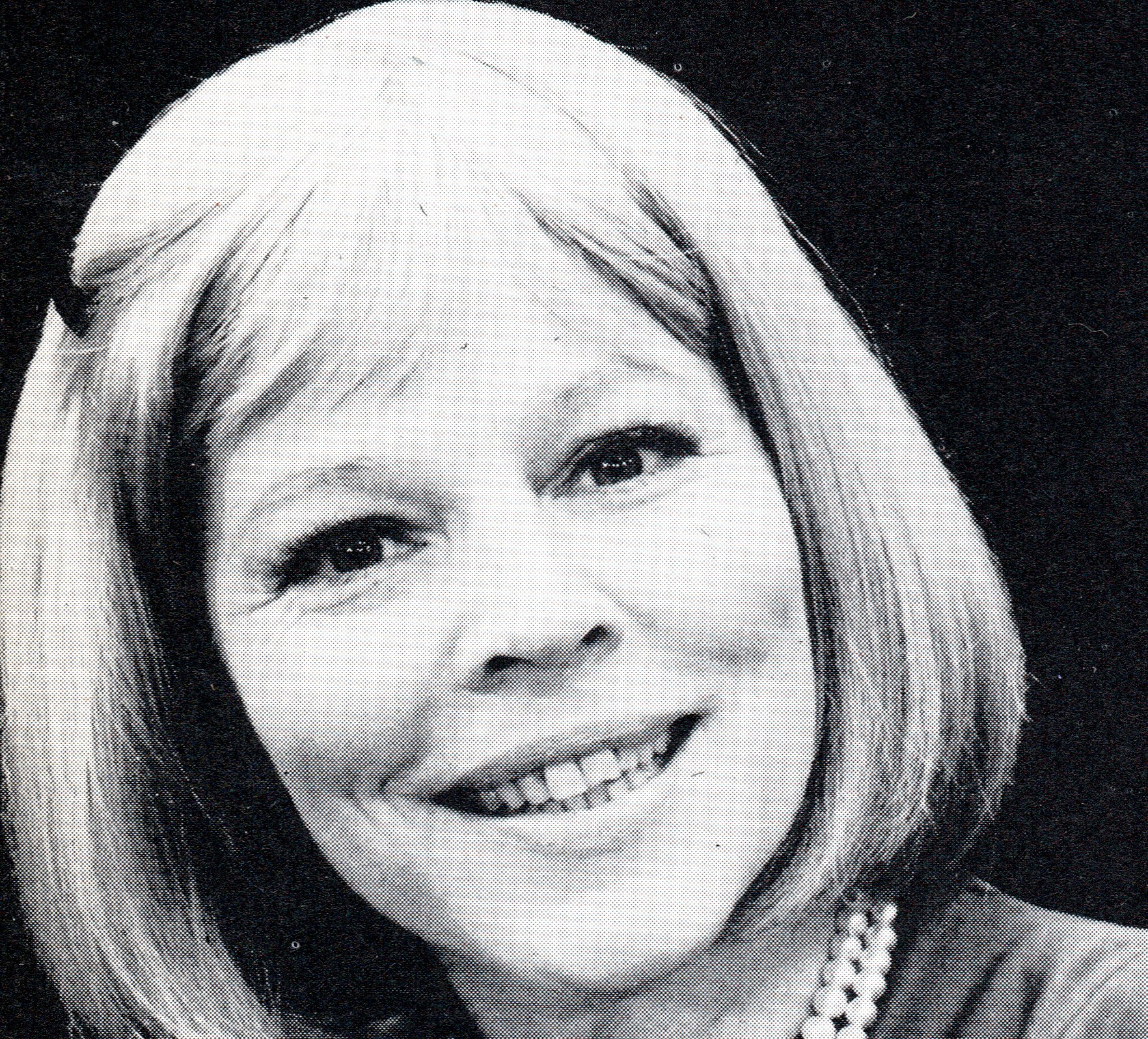
John Forster, Timothy Jerome, Judy Kahan, Jane Curtin.
PRETZELS [Revue] B: Jane Curtin, Fred Grandy, and Judy Kahan; M/LY: John Forster; D: Patricia Carmichael; S: Stuart Wurtzel; C: Clifford Capone; L: Ken Billington; P: Burry Fredrik and Walter Boxer in the Phoenix Theatre Production; T: Theatre Four (OB); 12/16/74-3/30/75 (120)

Done originally as a showcase sponsored by the Phoenix Theatre Company, this tasty little tidbit went down smoothly enough to warrant its resuscitation as an Off-Broadway effort. In that guise, it kept breathing for a comfortable three and a half months. It was a “Bright, bland and blithe” delectation, vowed Clive Barnes, who called it “small, modest, yet chic.” Martin Gottfried agreed that it was “modest,” while Douglas Watt called it “slight.”

Three comedian-singers (Jane Curtin, Timothy Jerome, and Judy Kahan) and an amusing pianist (John Forster), who occasionally joined in the fun, used Stuart Wurtzel’s simple but surprisingly adaptable set to run through a series of 15 skits on the theme of “mild urban disillusion,” as Barnes put it. The title referred to an old rock and roll trio who, years after splitting up and becoming successful as important people in science and politics, have a reunion and sing “Pretzels,” their 1961 hit single. Other bits included one about a would-be ladies man from Greenwich Village who comes on strong with pre-planned, arty talk about Ingmar Bergan or museum tapestries to girls at cocktail parties; one about Mozart’s efforts to come up with a commercial hit; another about a Spanish actress on an unemployment line who suddenly bursts out in the only English she knows, learned for a TV commercial; one dealing with a bored housewife who wants to sing and dance more than to play hostess at dinner parties; one in which an anthropologist working as a coffee waitress, for the experience, enjoys talking about a South Pacific tribe’s sexual habits, and so on.

The satire was rather weak, the program was uneven, and the music, while pleasant, in the pastiche vein reminiscent of familiar tunes. However, the lyrics were clever and laugh-provoking.

Most critics were impressed by the versatile cast, who had worked together in the popular improv revue, The Proposition. Barnes wrote, “The blonde Miss Curtin showed just the kind of range one hopes for in a revue performer, moving easily from a snob cosmetics lady to a Ninth Avenue harridan. Miss Kahan was equally versatile and spontaneous. I liked particularly her chirpy divorced mother, while Timothy Jerome showed consistent energy and style.” Although each went on to a successful career, the one who became a household name, of course, was Curtin after she hit it big on “SNL.”  

Monday, December 14, 2020

411. THE PRESIDENT'S DAUGHTER. From my (unpublished) ENCYCLOPEDIA OF THE NEW YORK STAGE, 1970-1975

THE PRESIDENT’S DAUGHTER [Musical/Jews/Romance/Yiddish Language] B: H. Kalmanov; M: Murray Rumshinsky; LY/P: Jacob Jacobs; CH: Henriette Jacobson; DS: Barry Arnold; T: Billy Rose Theatre; 11/3/70-1/3/72 (72)

Note: No photos are available for this production.

A wishful attempt at reviving Yiddish theatre in New York, on Broadway no less, this offering (subtitled “A Yiddish-American Musical Comedy”), with only occasional forays into English, had a minimal plot involving stereotypical characters in a romantic mix-up involving an orphan girl. Much of the show bore no relation to the plot, though, and the material was schmaltzy in style and effect.

Clive Barnes summed the plot up thusly: “a handsome widower, a nubile refugee who is acting as his housekeeper, an orphan daughter, a scheming divorcée, a spinster sister‐in law and cupid in the form of an old butter and egg man (that's right). Through a misunderstanding, the widower latches on to the scheming divorcée and the problem then becomes how to separate the two long enough so that the right couple can get married and provide the orphan daughter with a mother.”

This material was expressed over two acts in the form of sketches, songs, and dances, supplemented by a prologue that had only the vaguest connection to the book. Barnes said the highly sentimental music was “cool—Jewish wedding cool that is.” Everything was done broadly with boisterous energy at a brisk pace. The enthusiastic performers included Chayele Rosenthal as the lovesick refugee, Jacob Jacobs as the widower, Jack Rechtzeit as a butcher, and Michaele Burke as his spouse.

Barnes advised his readers, “If you do go though, watch out for the first‐act curtain. It's a beauty, untouched for a hundred years, straight out of ‘East Lynne’ and absolutely great. It may be the best curtain on Broadway between now and next June.” Unfortunately, no further details are available.

Sunday, December 13, 2020

410. PRESENT TENSE. From my (unpublished) ENCYCLOPEDIA OF THE NEW YORK STAGE, 1970-1975

Lois Smith, Biff McGuire.
PRESENT TENSE [Comedy-Drama/One-Acts] A: Frank Gilroy; D: Curt Dempster; S/L: Charles Cosler; P: TDJ Productions, Inc.; T: Sheridan Square Playhouse (OB); 7/18/72-7/23/72 (8)

“Come Next Thursday” [Marriage]; “Twas Brillig” [Films]; “So Please Be Kind” [Sex]; “Present Tense” [Marriage]

Biff McGuire and Lois Smith, both A-list stage actors, appeared in each of these four Off-Broadway one-acters by Frank Gilroy, author of the hit play The Subject Was Roses. Supporting them were less well-known players Stanley Beck, Sarah Cunningham, and Gary Nebiol. “As entertainment,” concluded Clive Barnes, “the pulse [of these plays] is dim and distant.” The evening struck John Simon” as an almost complete, although completely likable, failure.”

“Come Next Thursday” is a black comedy about a wife (Smith) who manages to overlook her wayward husband’s (McGuire) faults. “Twas Brillig” deals with a Hollywood screenwriter (Beck) unable to compromise his principles to please his studio boss (McGuire). “So Please Be Kind,” considered the program’s strongest piece,” shows a pair of adulterous lovers in a hotel room who are unable to consummate their passion when they get sidetracked by an inability to remember the name of an actor they passed in the street. The final playlet is about a husband’s (McGuire) attempt to keep his wife (Smith) from learning of their son’s death in Vietnam.

Barnes thought the evening as a whole too wordy and only sporadically stageworthy. Simon commented, “Despite good acting, the work doesn’t belong in a theatre struggling for its life, which won’t be saved by amicably pseudo-serious trifles.” 

Until the pandemic hit, of course, Lois Smith, in her mid-90s, continued to reign as a beloved doyenne of the New York stage (not to mention other media). One hopes she will return in good health to provide more of her personal and artistic warmth when this thing is over.